Cultural Intelligence (CQ) in Intercultural Classrooms
Practice Reflection
Cultural Intelligence becomes meaningful in classrooms when teachers notice difference, pause before judging, and adapt communication in ways that protect dignity and expand participation.
Introduction
In culturally diverse classrooms, teachers interact with students who come from many different cultural, linguistic, and social backgrounds. To teach effectively in these environments, educators must develop the ability to understand cultural differences and adapt their teaching practices accordingly. One useful framework that supports intercultural competence is Cultural Intelligence (CQ).
Cultural Intelligence refers to a person’s ability to function effectively in culturally diverse situations. In education, CQ helps teachers communicate respectfully with students from different backgrounds, understand cultural perspectives, and create inclusive learning environments. Developing cultural intelligence allows educators to respond thoughtfully to cultural differences and build stronger relationships with students and families.
The Four Cultural Intelligence Competencies
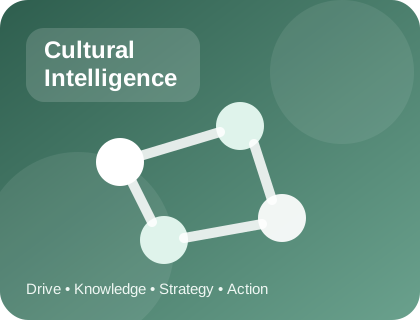
The Cultural Intelligence framework includes four key competencies that help individuals interact successfully across cultures: CQ Drive, CQ Knowledge, CQ Strategy, and CQ Action.
CQ Drive refers to the motivation and interest a person has in learning about different cultures. Teachers who demonstrate CQ Drive are curious about cultural diversity and actively seek opportunities to learn from people with different backgrounds. In classrooms, this motivation encourages educators to create inclusive learning environments where students feel valued and respected.
CQ Knowledge involves understanding how cultures may differ in values, communication styles, and social norms. Teachers who develop cultural knowledge are better able to recognize cultural differences that influence students’ behaviour, learning styles, and interactions in the classroom.
CQ Strategy refers to the ability to plan and think carefully about intercultural interactions. Educators who use CQ Strategy reflect on their assumptions about culture and consider how their actions may affect students from different backgrounds.
CQ Action focuses on the ability to adapt behaviour in culturally appropriate ways. Teachers demonstrate CQ Action when they adjust their communication styles, classroom strategies, and teaching approaches to support diverse learners.
Resource
https://www.youtube.com/watch?v=8H6Zr1K7q9A
This video explains the concept of cultural intelligence and highlights how individuals can develop the skills needed to interact effectively with people from diverse cultural backgrounds.
Classroom Application
Teachers can apply Cultural Intelligence in classrooms by creating learning environments that respect cultural diversity and encourage collaboration among students. One way to do this is by encouraging students to share their cultural perspectives during classroom discussions. This allows students to learn from each other and develop empathy for different viewpoints.
Another important practice is adapting teaching strategies to support diverse learners. Teachers can use multiple instructional methods, provide clear explanations, and encourage collaborative learning activities that allow students to communicate and learn together.
By developing Cultural Intelligence, educators can create classrooms where cultural differences are recognized as valuable learning opportunities. These inclusive learning environments help students build respect, empathy, and intercultural communication skills that are essential in diverse societies.
Resources
https://www.youtube.com/watch?v=K3S76gAKp6Q
This video introduces cultural intelligence as the ability to interact effectively across cultures. It supports this page by showing why educators need cultural awareness, adaptability, and reflective thinking in diverse classrooms.
https://www.youtube.com/watch?v=Po6zqj_TXPk
This video explains cultural intelligence as the ability to work and relate effectively across cultures. It is useful for this page because it helps explain why teachers need cultural awareness, adaptability, and reflective practice in diverse classrooms.
Personal Reflection
Learning about Cultural Intelligence helped me understand the importance of developing awareness of cultural differences in teaching and learning. Reflecting on my own experiences teaching in international classrooms, I realized that cultural understanding plays a significant role in how teachers interpret student behaviour and communication.
For example, in some cultures students may hesitate to speak openly in class discussions, while in others active participation is encouraged. Teachers who develop cultural intelligence are able to recognize these differences and respond in supportive ways that encourage student confidence and engagement.